BRENT MANNING
DIRECT DEMAND FOR BOUTIQUE HOTELS

Hotel SEO & AI Search

Relying on booking sites to winning more direct bookings.

Help the right guests discover your hotel in Google results and AI answers, understand what makes it worth choosing, and book on your own website.

Former Head of SEO, Expedia ANZ · 20 years in search

Find My Direct Booking Opportunities

For owners and general managers of independent boutique hotels

Focus on the rooms, experiences, and stay dates that matter to your business, not just a bigger traffic report.

Start with a Direct Demand Review: relevant guest searches, one priority booking journey, and three recommended actions.

Guest searchRelevant hotel pageConfident decisionDirect reservation

Does this sound like your hotel?

The bookings are coming in. Too much of the value is going elsewhere.

The next move is to identify which guests you want to attract, and what stands between their search and a direct reservation.

  • The bookings are coming in. Too much of the value is going elsewhere.

    You deliver the experience. Your team looks after the guest. But when you review where the reservations came from, and what it cost to acquire them, you wish your own website played a bigger role.

  • Saturday looks healthy. Tuesday is another story.

    Reception still needs covering. The property still needs maintaining. You do not need more attention for dates that already sell. You need a plan for the rooms and nights that could use more demand.

  • Your best rooms are easier to appreciate than they are to find.

    You have a suite with a private terrace, a room with an exceptional view, or a package that makes an anniversary feel special. Guests understand the difference once you explain it. Your website should help make that value clear before they reduce the decision to a nightly rate.

  • Your marketing to-do list keeps growing. Your team does not.

    There is always another offer to create, another social post to approve, or another destination article to publish. Meanwhile, someone still needs to answer enquiries, chase the website supplier, and work out which activity is actually helping.

  • The report looks encouraging. The connection to reservations is less clear.

    Rankings are moving. Website visits are up. But the question you need answered is simpler: Is this helping us win the bookings we actually want?

  • The old way: keep adding activity and hope the booking mix improves.

    When gaps appear, the response becomes another promotion, more content, or greater reliance on the channels already bringing reservations. Those tools may have a place. They should not be the whole plan.

The new way

Help guests find you, choose you, and book direct.

Hotel SEO & AI Search, focused on the bookings your hotel wants. The work connects three things: what a suitable guest is looking for, why they should choose your hotel, and how they take the next step toward booking.

01

Start with the stays your hotel wants, not a generic keyword list

Perhaps you want more guests choosing your premium suites for celebrations. Perhaps you want multi-night stays that fit a quieter period. Or perhaps you want small-group enquiries with suitable dates, realistic requirements, and a reason to choose your property.

  • Identify which opportunities make sense for your hotel
  • Examine the searches, questions, and pages connected to those decisions
  • Attract the stays you are well equipped to deliver
  • Skip chasing everyone with a long keyword list
02

Give guests a page that helps them choose

A traveller considering a suite needs more than an attractive photograph. They need to understand the layout, the view, what is included, and why that room fits their trip. The work connects relevant searches with useful room, experience, package, and destination pages.

  • Make important details easy for guests to find
  • Keep property information clear for search tools
  • Answer the questions a prospective guest could ask
  • Focus on accurate details, not tricks or AI promises
03

Make the next step toward booking clear

Once someone has found the right room or experience, your website should help them move forward, from the landing page to availability, room selection, and the booking engine. Where the opportunity involves groups, retreats, or buyouts, the enquiry should help establish fit before your team invests time preparing a proposal.

  • Review the route from landing page to booking engine
  • Remove unanswered questions and unclear room differences
  • Clarify next steps and visible barriers
  • Turn a relevant search into a clear direct booking path

The aim is not to attract everyone. It is to make your hotel easier to discover for the stays you are well equipped to deliver.

“Which boutique hotels have private terraces and are within walking distance of restaurants?”

When those features genuinely describe your property, your website should explain them clearly. That is the practical aim of the AI search work: help your hotel’s relevant information be discovered and understood when tools generate answers to questions like these.

A relevant search should lead to a convincing page and a clear next step toward booking direct.

What we work toward

Help suitable guests discover your hotel before they know its name, with better visibility for the rooms and experiences you most want to sell. You remain the hotelier. You should not have to become a search specialist to understand the plan.

Find My Direct Booking Opportunities
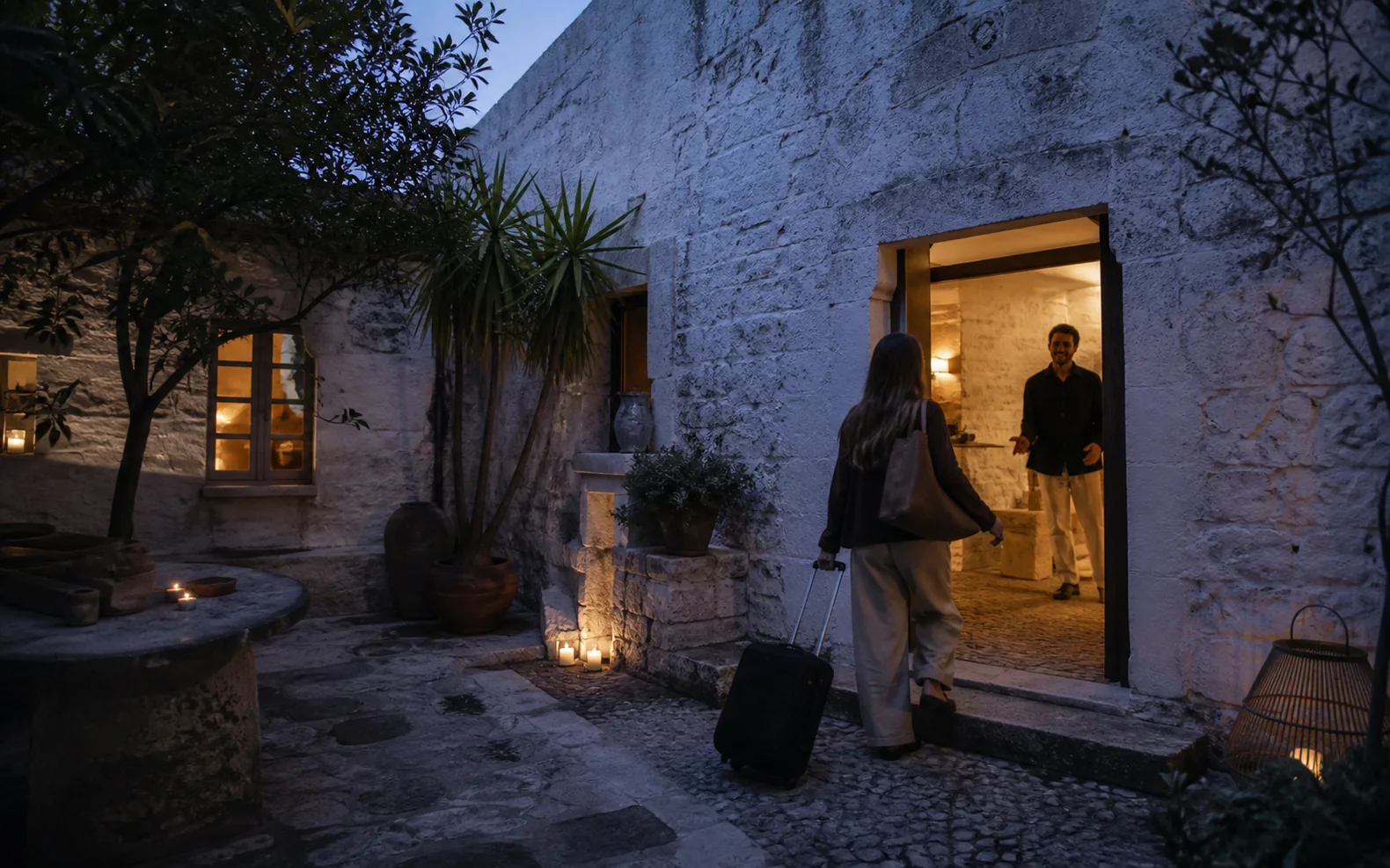
A traveller arriving with luggage at the warmly lit entrance of an independent hotel
The moment that matters

A guest reaches your hotel directly, with the context and confidence to choose it.

Your first step

Know what deserves attention first.

Before committing to a larger search programme, start with one priority. That might be more direct suite bookings, better visibility for a distinctive experience, or demand connected to a quieter part of your calendar. The Direct Demand Review gives you a focused starting point.

01

A snapshot of the searches that matter

See how your hotel appears for selected searches connected to that priority, which alternatives appear alongside it, and which pages could make a stronger case for your property.

You get: A clearer view of where the relevant search opportunities may be.

02

A review of one guest’s route toward booking

Follow a priority journey from the search result to the relevant hotel page and into the booking process. We look for unanswered questions, unclear room differences, confusing next steps, and visible barriers worth investigating.

You get: A practical view of where the experience could be clearer.

03

Three recommended actions

Receive a short, ordered set of priorities, with the reason behind each recommendation and any implementation or measurement dependencies.

You get: A starting plan, not an unranked list of everything that could possibly be changed.

Leave with a clearer decision.

Should the next priority be helping guests find you, helping them choose you, or making it easier to book direct? That is what the review is designed to clarify.

A public-site review identifies visible opportunities. It does not establish exactly how many bookings were lost or promise a particular revenue gain.

Share your hotel website and the bookings you most want to attract.

I’ll reply with the next step.

Find My Direct Booking Opportunities

Relevant experience

Evidence you can examine.

Travel search experience from inside Expedia.

My background includes leading SEO at Expedia Australia and New Zealand. That work combined technical search recovery, destination content, hotel partnerships, and tourism relationships. It gave me experience with how a large travel marketplace competes for discovery, and how search connects with commercial performance.

Today, I bring that perspective to a different question: How can an independent hotel make a stronger case for the bookings it can realistically win direct?

Boutique-hotel research

Research you can inspect.

My published boutique-hotel research examines search visibility across 56 hotels, lodges, and retreats, using keyword data collected in June and July 2026. It separates searches about a destination from searches connected to choosing accommodation and experiences, a useful distinction when deciding which pages deserve attention.

This is a market-research snapshot, not a hotel client-results study.

Explore the Boutique Hotel Search Research
20years in search
56hotels, lodges and retreats studied
2026June and July keyword research snapshot

Find the direct booking opportunity that deserves attention first.

Share your hotel website and the stays you most want to attract.

Find My Direct Booking Opportunities

Frequently asked questions

What hotel teams ask before we work together.

What do you mean by hotel SEO and AI search?

Hotel SEO helps search engines understand your website and helps travellers discover relevant pages about your property. AI search work focuses on making your property information and guest answers clear and accessible for AI-powered search experiences. For your hotel, that means explaining the details a guest needs to choose: where you are, what your rooms offer, which experiences are available, and what makes your property suitable for their trip. The aim is to help your hotel be discovered in Google results and AI answers, then give interested guests a useful route to your website and booking process.

How is this different from buying more blog posts or a monthly ranking report?

The starting point is the business you want your hotel to attract. We identify the relevant guest decisions, the pages that should support them, and the next steps toward a reservation or suitable enquiry. Content and rankings can support that work. They are not the outcome by themselves.

Will this replace Booking.com, Expedia, or our other booking channels?

No. The aim is to strengthen your own channel, not ask you to abandon the distribution you use. We focus on opportunities your hotel has a realistic chance to win directly. The goal is a better booking mix, not an overnight switch away from every intermediary.

Can the work focus on quieter dates or particular rooms?

Yes. Those priorities should shape the strategy. For example, we might investigate searches connected to a premium room type, a multi-night stay, or a trip purpose that could fit a quieter period. The opportunity still has to match your property, destination, availability, and the demand that exists. Search work is not a promise to sell a particular night.

Do we need a new website?

Not automatically. The review helps determine whether the priority is improving current pages, adding a focused page, clarifying navigation, or addressing a technical limitation. When a larger change is warranted, you should understand why before committing to it.

Can you work alongside our existing agency or website supplier?

The work can be scoped to complement your current team. We agree which changes I handle, which require your website or booking-engine provider, and where approvals are needed. You should not have to guess who is responsible for turning a recommendation into a live improvement.

How much time will our hotel team need to contribute?

Your team provides the property knowledge: which guests matter, which rooms or experiences deserve attention, and what information must be accurate. The workload depends on the agreed scope and your existing systems. Access requirements, approvals, and implementation responsibilities should be clear before the work starts. The aim is a manageable process, not an unexpected second job for your general manager.

How quickly will we see results?

The first deliverable is a clearer set of priorities, not a promise of immediate reservations. Search changes take time to be reflected, and not every change produces a noticeable improvement. Some effects may appear relatively quickly; others can take several months. We agree milestones around your starting position, the work involved, and the evidence available.

How will we know whether it is helping?

Reporting is built around the closest reliable measures to the booking outcome. Depending on your tracking, that may include relevant search visibility, visits to priority pages, booking-engine entries, completed reservations, direct revenue, and qualified enquiries. A booking-engine click is not counted as a reservation. An appearance in an AI answer is not counted as a booking. Where the data allows, we also consider cancellations, stay dates, and room mix. When attribution is incomplete, that limitation stays visible.

Can you guarantee rankings or inclusion in AI answers?

No. I do not guarantee a particular ranking, AI mention, recommendation, or number of bookings. What we can agree is the work, the priorities, the implementation responsibilities, and how progress will be assessed. The aim is to improve your hotel’s opportunity to be discovered and chosen, not promise control over what a search platform displays.

What does it cost to work together?

The scope and fee depend on the work your property needs. Before a paid engagement begins, we agree what is included, who implements it, how progress is reviewed, and the commercial terms. Start by sharing your website and the opportunity you want to explore.

Ready to explore the opportunity?

Start by sharing your website and the bookings you most want to attract.

Find My Direct Booking Opportunities

Meet Brent Manning

Search expertise with the guest’s decision in mind.

I help independent hospitality businesses connect search visibility with the actions that matter: choosing a room, checking availability, making a reservation, or sending a suitable enquiry.

My approach starts with understanding your property, not fitting it into a generic content schedule. What makes the stay distinctive? Who appreciates it? Which rooms or periods deserve more attention? And what does a guest need to know before choosing you? Those questions give the search work a purpose.

Travel-specific perspective
Experience in travel search informs how I approach the journey from discovering a destination to choosing somewhere to stay.
Strategy connected to implementation
The plan should identify what needs to change, why it matters, and who is responsible for making it happen.
Commercial priorities you can understand
You should be able to see how each piece of work relates to the guests and bookings you want, not need a technical background to interpret the report.

Outside the work. I’m based in Puerto Vallarta, Mexico. Away from search, you’ll find me paddleboarding, training Muay Thai, or making music.

It is a clearer path between the right guest and your hotel.

Tell me about your hotel

Which direct booking opportunity should your hotel pursue first?

Start with the room, experience, guest type, or quieter period you most want to improve. Your Direct Demand Review will examine relevant searches, one priority booking journey, and the actions that deserve attention first.

Find My Direct Booking Opportunities